KiwiSaver minimum contribution changes
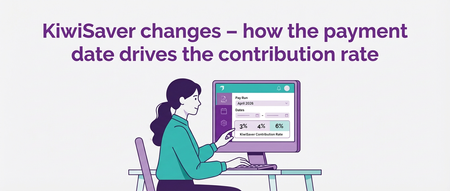
We know many PayGlobal administrators are asking how the KiwiSaver minimum contribution increase from 3% to 3.5% (from 1 April 2026) should be applied in practice, especially where pay periods span March and April. This post summarises: The confirmed IRD position on when to use the new rate How this maps to PayGlobal behaviour Worked examples for common timing scenarios What you can do next to ensure your employees are managed correctly IRD guidance – payment date drives the rate IRD has confirmed that for KiwiSaver minimum contributions you should: Always use the KiwiSaver contribution rate that applies on the date the employee is paid. This applies even if the pay period: spans dates before and after 1 April 2026, or ends on or before 31 March 2026, but payment is made after that date. In other words: The start or end date of the pay period does not matter – the payment date determines whether you use 3% or 3.5% (unless there is an approved temporary rate reduction in place). What this means in PayGlobal From the 2026 NZ Tax release (v4.76.0.0), PayGlobal supports the 3.5% minimum KiwiSaver rate and related rule changes. To stay aligned with IRD’s guidance, you should configure and maintain your KiwiSaver and Employee Super Fund records so that: Any pay with a payment date on or after 1 April 2026 uses the 3.5% minimum for employees on the standard minimum rate. Any pay with a payment date before 1 April 2026 continues to use the 3% minimum, even if the PTD (pay period) includes 1 April 2026. For employees with an IRD‑approved temporary rate reduction (for example staying at 3% for a defined period), the reduced 3% rate continues to apply for pays within that approved reduction period, regardless of whether the payment date is on or after 1 April 2026. Your configuration (for example, effective dates on KiwiSaver, Employee Super Fund and KiwiSaver State records) should be set so that the calculated result in PayGlobal matches the IRD payment date outcome described above. Three key timing scenarios (with examples) Below are the three core scenarios we see most often questioned, and how the KiwiSaver rate should be applied. Scenario 1 – Pay is paid early relative to its PTD date range Description: Payment date is before 1 April 2026, but the PTD includes dates on or after 1 April 2026. Outcome: New rates do not apply. Continue to use 3%. Example Pay period (PTD): 23 March – 5 April 2026 Payment date: 30 March 2026 Result: Because the payment date is before 1 April 2026, the employer must use the 3% minimum KiwiSaver contribution rate (unless the member has elected a higher rate). The fact that the PTD includes 1 April does not change this. Scenario 2 – Pay is paid in-line with its PTD date range Description: Payment date is on or after 1 April 2026, and the PTD is the first pay for the 2026/27 tax year, with 1 April 2026 falling within the PTD. Outcome: New rates apply. Use 3.5%. Example Pay period (PTD): 23 March – 5 April 2026 Payment date: 2 April 2026 Result: Because the payment date is after 1 April 2026, the employer must use the 3.5% minimum KiwiSaver contribution rate for the whole pay, unless: the member has elected a higher rate, or the member has an approved temporary rate reduction in place (in which case the reduced rate applies). Scenario 3 – Pay is paid late relative to its PTD date range Description: Payment date is on or after 1 April 2026, but the PTD falls entirely before the payment date (for example, a March pay processed and paid in early April). Outcome: New rates apply. Use 3.5%. Example Pay period (PTD): 25 March – 31 March 2026 Payment date: 2 April 2026 Result: Even though the PTD is fully in March, the payment date is after 1 April 2026, so the employer must use the 3.5% minimum KiwiSaver contribution rate (again, subject to any higher elected rate or approved temporary reduction). What you should do next For payroll admins, we recommend: Confirm your version Make sure you are on the NZ Tax 2026 (v4.76.0.0) PayGlobal release. Plan your KiwiSaver Update Tool run(s) When you run the KiwiSaver Update Tool, you may need to use an employee query that filters employees by pay period code (for example, weekly vs fortnightly), so you can control which group of employees you are updating at a time. Before you run the tool, review your pay dates across all pay runs and pay groups so you know, for each frequency, which is the first pay with a payment date on or after 1 April. Use this to determine the Application Date(s) and the start dates you will assign. This helps you align the Application Date and effective start dates with the correct pay periods for each frequency. Set the start date for new Employee Super Fund records When new Employee Super Fund records are created for the 3.5% rate (either manually or via the KiwiSaver Update Tool), set the start date on those records so that it matches the start of the first pay period where the payment date is on or after 1 April 2026 for that pay group. This ensures PayGlobal’s calculation lines up with the IRD requirement to use the rate that applies on the payment date. Test in a non‑live environment where possible Run the KiwiSaver Update Tool in report‑only mode first and review the output. Then test pays and confirm the KiwiSaver results match the payment‑date‑driven outcomes described in the scenarios above. If you have a scenario that does not seem to match the behaviour described here, or you are unsure how to set up dates in your specific database, please log a case with MYOB Support or post your scenario (with example dates and payment timing) in this community so we can help you validate it. Reference materials For further guidance and the wider NZ Tax 2026 update, refer to the PayGlobal End of Year Resources (Help Centre).268Views2likes0CommentsNZ tax year‑end made easier: MYOB PayGlobal packages explained
Tax year end can sneak up fast – especially when you’re juggling roster changes, leave, and day-to-day payroll queries. The MYOB PayGlobal New Zealand tax upgrade packages are designed to take the heavy lifting off your team, so you can roll into the new year confident your system is compliant, clean, and ready to go. This post walks through what the packages actually do for you, what’s included in each level, and what’s new this year. What are the MYOB PayGlobal EOFY packages? Each year, MYOB releases an update for MYOB PayGlobal with the latest supported tax changes and product improvements. The tax upgrade packages bundle that software update with a set of fixed‑scope services, delivered remotely by MYOB PayGlobal consultants. Tax packages – at a glance We’ve got different packages to help businesses of all shapes and sizes manage year-end: Essentials – MYOB manages your core product tax software upgrade and conducts essential payroll database health checks to ensure you’re set up for tax time with optional add-ons: Holidays & Calendars – keep your payroll in sync with the correct public holidays and regional anniversary days, ensuring the right holiday rules and entitlements will be automatically applied. Ensure your accumulators and period dates stay aligned and ready for the new tax year. End of Year Reporting & Balancing – MYOB PayGlobal experts will help to run and reconcile your key payroll and tax reports, so you can close the year off cleanly and confidently. The Works – everything above in one comprehensive package. Essentials – your ‘foundational’ tax upgrade The Essentials package is the foundation most customers start with. It’s aimed at teams who want MYOB to handle the core upgrade work and run key checks over the database. 1. Database health check First, we run a structured health check on your MYOB PayGlobal database to catch common data and configuration issues that can cause grief at year‑end, and give you clear lists of records to review and clean up, such as: Health check area What it covers Employee data quality Highlights gaps or inconsistencies in key employee details that can cause issues with payday filing or reporting. Duplicate & inconsistent records Surfaces potential problems with tax IDs, bank accounts and addresses so you can validate and clean them up before year‑end. Tax, KiwiSaver & wage settings Checks for configuration issues around ESCT/STC, KiwiSaver eligibility, and employees who may be impacted by minimum wage changes. Legacy & dormant data Identifies very old or unused employee records and large volumes of historic payslips that may be suitable for clean‑up or archiving. Deductions & protected earnings Reviews how key deductions (such as child support and arrears) are prioritised to help reduce the risk of under‑ or over‑deduction. System security & integrity Flags potential issues in user security and database integrity so you can address structural risks early. Old payslip files Optional removal of historical payslip documents to reduce database size and improve performance. You’ll receive a summary of what we’ve found and recommended actions, so you know what really needs attention before year‑end. For additional information about the health check, see the MYOB PayGlobal help centre. 2. Tax software upgrade installation Next, we upgrade you to the supported New Zealand tax release for the new year: Refresh and upgrade a test database Install the new tax-ready software version of MYOB PayGlobal Upgrade the live database once test checks are done Ensure the scheduler and key background jobs keep running as expected Where in scope, upgrade Employee Self Service (ESS) to a compatible version alongside the core upgrade 3. Tax compliance preparation As part of Essentials, we also help you get ready for the coming tax year: Apply the latest supported tax settings for MYOB PayGlobal Run minimum wage checks to help you spot employees who may need rate adjustments The goal is to minimise last minute surprises in the first pay of the new tax year. 4. KiwiSaver configuration review and health check To reduce compliance risk around retirement savings, the package also includes a KiwiSaver focused review: Update KiwiSaver Contributions to apply supported changes and produce clear output for your review Highlight edge cases (for example, certain employee scenarios) where a manual Employer Superannuation Contribution Tax (ESCT) check is still recommended Flag common configuration issues such as incorrect KiwiSaver enrolment for Withholding (WT) tax codes This doesn’t replace your internal compliance checks, but it does mean you’re not starting from scratch with release notes and a blank spreadsheet. *Note this work does not include updates for non-KiwiSaver or Salary Packaging scenarios, please reach out to your Account Manager if you need assistance in these areas. 5. MYOB PayGlobal report review – new in 2026 Alongside the tax changes, MYOB is continuing to modernise MYOB PayGlobal’s reporting, and the Essentials package now includes support to modernise custom reports: Modernising standard reports – more standard reports are being moved off legacy components, improving stability, security and long‑term support. These updates are being delivered as part of the standard software provision, at no additional cost. Helping you modernise custom reports – as part of Essentials, MYOB will: Identify selected reports that can be automatically uplifted to the new supported format, and when a redesign or alternative tool (such as SSRS or Power BI) is likely to be required instead. Attempt to update eligible custom reports to the supported format where technically possible. Provide a summary of updated reports, so you can run your own validation and confirm the content and results still meet your business requirements. Where a custom report can’t be upgraded cleanly, or you identify issues after uplift, work with Support or Consulting Services on remediation or a rebuild (this sits outside the fixed‑price package). Even where a report appears to upgrade successfully, it’s still essential that you review and validate the output before relying on it in production. This gives you a clear, supported pathway to keep both your standard and custom reporting aligned with the ongoing MYOB PayGlobal reports modernisation work. For more information, see the MYOB PayGlobal help centre. *Note this does not include ESS, SSRS or BI reporting reports. Optional add‑ons Depending on how much help you want at year‑end, you can add extra services on top of Essentials. Holidays & Calendars The Holidays & Calendars add‑on is all about getting your new year schedule into MYOB PayGlobal before you need it: Add one year of public holidays, covering up to 2 years setup in advance Add one year of payroll calendars, usually covering up to five pay period types (weekly, fortnightly and monthly) This is a simple way to avoid last‑minute scrambling when you realise next year’s calendars haven’t been built yet. End of Year Reporting & Balancing The End of Year Reporting & Balancing add‑on is aimed at teams who want help closing off the current year cleanly: Support with end‑of‑year reporting in MYOB PayGlobal Help to balance and reconcile your key payroll and tax reports This can be especially useful if you only go through this process once a year and don’t want to re‑learn the process every time. The Works – everything in one bundle If you want a “set and forget” option, The Works bundles everything into one package: Essentials (tax upgrade + health checks + core compliance preparation) Holidays & Calendars End of Year Reporting & Balancing It’s designed for organisations who want MYOB to manage the full New Zealand tax year rollover, from upgrade through to reporting and calendars, with a single booking and fixed scope. How to book or ask questions Keep an eye out for communications. We’ll share more information about the MYOB PayGlobal tax software release upgrade and upgrade packages to take the stress out of this year’s tax year-end. If you’d like to discuss your options, we’re here to help: Reach out to your MYOB Account Manager or PayGlobal Support, and/or Post a question here in the Community with a brief description of your environment (Online/On‑Prem, complexity, any specific queries around KiwiSaver or custom reports) That will help us – and other customers – share the most relevant advice and experiences for your situation. So, here’s to a stress free, well prepared EOFY with MYOB PayGlobal 🎉253Views2likes0Comments
Payroll Activity Summary vs Payroll Register Summary report in MYOB AccountRight
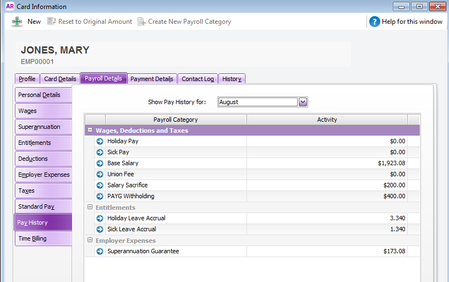
Hi Everyone As it is the end of the payroll year we thought we do an overview of two key payroll reports that are great to use at the end of the payroll year. These can be used to ensure that you have the correct values ahead of preparing your payment summaries. If you go to Reports>>Payroll>>Employees you have two reports; Activity Summary and Register Summary. Both reports do appear identical but are drawing their information from two different locations. The Payroll Activity Summary report is looking at the actual Payroll transactions recorded in payroll, whereas the Payroll Register Summary report looks at the employee’s card – in particular, the Payroll History section of the Payroll Details tab. Ideally, both of these particular reports will match as the payroll transactions recorded will match up with the employee’s card. What if the Payroll Activity Summary and Register Summary reports don’t match? If these particular reports don’t match it is likely that the card history has been updated manually. To get them to match do follow the below instructions: Run the Activity Summary and Register summary on a per month basis, to narrow down the month(s) that the reports don’t match Once the month(s) have been determined where it doesn't balance, check the payroll transactions in those months to ensure that they have been recorded correctly When that has been checked navigate to the pay history section of the employee's card - Card File>>Cards Lists>>Employees>Select the relevant employee's card>>Payroll Details tab>>>Pay History (left-hand side) Select to Show pay history for that particular and overtype that value to be same as the payroll transaction recorded Rerun the relevant reports to ensure that they do match. Once you Activity Summary and Register Summary reports do match, you are in a great position to prepare your payment summaries.12KViews2likes0CommentsAustralian tax year‑end made easier: MYOB PayGlobal packages explained
Tax year‑end can sneak up fast – especially when you’re juggling roster changes, leave, super changes and day‑to‑day payroll queries. The MYOB PayGlobal tax upgrade packages are designed to take the heavy lifting off your team, so you can roll into the new financial year confident your solution is compliant, clean, and ready to go. This post walks through what the packages actually do for you, what’s included in each level, and what’s new this year. Important: This article explains how MYOB PayGlobal supports Australian tax and Payday Super. It doesn’t constitute tax, payroll or legal advice. Your organisation remains responsible for meeting your obligations and confirming your settings with your advisors and the ATO. What are the MYOB PayGlobal EOFY packages? Each year, MYOB releases an update with the latest supported Australian tax changes, superannuation updates and product improvements. The tax upgrade packages bundle that software update with a set of fixed‑scope services, delivered remotely by MYOB PayGlobal consultants. Tax packages – at a glance We’ve got different packages to help businesses of all shapes and sizes manage year‑end: Essentials – MYOB manages your core product tax software upgrade and runs essential payroll database health checks to ensure you’re set up for tax time. Optional add‑on: Holidays & Calendars – keep your payroll in sync with the correct public holidays and pay calendars, so the right rules and entitlements are automatically applied. Optional add‑on: End of Year Reporting & Balancing – MYOB PayGlobal experts help you run and reconcile your key payroll, STP and super reports, so you can close the year off cleanly and confidently. The Works – everything above in one comprehensive package. Essentials – your foundational tax upgrade The Essentials package is the foundation most customers start with. It’s aimed at teams who want MYOB to handle the core upgrade work and run key checks over the database. 1. Database health check We run a structured health check on your MYOB PayGlobal database to catch common data and configuration issues that can cause grief at year‑end, and give you clear lists of records to review and clean up, such as: Health check area What it covers (AU focus) Employee identity & contact data Employee Checks plus duplicate address/TFN/bank/tax-number checks, and long-inactive or very old employees. Tax & STP coding STP checks, termination reasons, tax code overrides and ETP processing items that can impact STP Phase 2/EOFY. Visas & work eligibility Visa records, including overlapping dates and tax coding alignment with visa conditions. Wages & minimum entitlements Minimum Wage Check to highlight employees whose current rates may fall below new national minimums. Super & Payday Super configuration & checks Super and STP allowance mappings, RESC vs salary sacrifice, and OTE vs SG checks for SG and super reporting. Allowances, deductions & costing structures Rarely used allowances, deductions, cost centres and job codes that may be candidates to expire or hide. User access, security & ESS usage Dormant PayGlobal/ESS users and missing employee mappings for security and access clean-up. Database size & maintenance Large/high-growth tables and overall table sizes to plan archiving/purging and improve performance. You’ll receive a summary of what we’ve found and recommended actions, so you know what really needs attention before EOFY. For additional information about the health check, see the MYOB PayGlobal help centre. 2. Tax software upgrade installation Next, we upgrade you to the supported Australian tax release for the new year: Refresh and upgrade a Test database (where applicable). Install the new tax‑ready MYOB PayGlobal version. Upgrade the Live database once test checks are done. Ensure the scheduler and key background jobs keep running as expected. Where in scope, upgrade Employee Self Service (ESS) to a compatible version alongside the core upgrade. 3. Australian tax and compliance preparation As part of Essentials, we also help you get ready for the coming financial year: Apply the latest supported tax & super settings. Confirm key parameters such as tax year dates, thresholds and relevant configuration flags in line with the release notes. Run minimum wage checks so you can identify employees who may need rate adjustments to maintain compliance. Update paid parental leave to align with the national minimum wage. Update employee related Superfund values (where applicable) The goal is to minimise last‑minute surprises in the first pay of the new financial year. *Note this work does not include updates for salary packaging or defined benefit scenarios, please reach out to your Account Manager if you need assistance in these areas. 4. Australian superannuation & Payday Super readiness With Payday Super and Qualifying Earnings (QE) changes coming into effect, Essentials includes an allowance review, so you’re not starting from a blank page: Confirm how your system is currently configured for Super Guarantee (SG) Provide clear output you can use to review which allowances and payments are currently flagged for super. This doesn’t replace a full Payday Super review package, but it does mean your core setup has been reviewed in the context of the new rules and tools, and you have a clearer starting point. For more advanced scenarios and support, we recommend booking a dedicated Payday Super review package. 5. MYOB PayGlobal report review – report upgrade content Alongside the tax changes, MYOB is continuing to modernise MYOB PayGlobal’s reporting. The Essentials package includes support to modernise selected reports: Modernising standard reports – more standard reports are being moved off legacy components, improving stability, security and long‑term support. These updates are delivered as part of the standard software provision, at no additional cost. Helping you modernise custom reports – as part of Essentials, MYOB will: Identify selected standard‑based custom reports that can be automatically uplifted to the new supported format, and when a redesign or alternative tool (such as SSRS or Power BI) is likely to be required instead. Attempt to update eligible custom reports to the supported format where technically possible. Provide a summary of updated reports, so you can run your own validation and confirm the content and results still meet your business requirements. Where a custom report can’t be upgraded cleanly, or you identify issues after uplift, work with Support or Consulting Services on remediation or a rebuild (this sits outside the fixed‑price package). Even where a report appears to upgrade successfully, it’s essential that you review and validate the output before relying on it in production. This gives you a clear, supported pathway to keep both your standard and custom reporting aligned with ongoing MYOB PayGlobal reporting modernisation work. For more information, see the MYOB PayGlobal help centre. *Note: This report upgrade work does not include ESS, SSRS or BI report redesigns, which can be scoped separately. Optional add‑ons Depending on how much help you want at year‑end, you can add extra services on top of Essentials. Holidays & Calendars This add‑on is all about getting your new year schedule into MYOB PayGlobal before you need it: Add one year of public holidays, covering up to 2 years setup in advance Add one year of payroll calendars, usually covering up to five pay period types (weekly, fortnightly and monthly) This is a simple way to avoid last‑minute scrambling when you realise next year’s calendars or holidays aren’t configured. End of Year Reporting & Balancing This add‑on is aimed at teams who want help closing off the current year cleanly: Support with end‑of‑financial‑year reporting in MYOB PayGlobal, including core payroll and STP reports. Help to balance and reconcile your key payroll, super and tax reports, so final figures match what you’re sending to the ATO and other stakeholders. This can be especially useful if you only go through this process once a year and don’t want to relearn the process every time. The Works – everything in one bundle If you want a “set and forget” option, The Works bundles everything into one package: Essentials (tax upgrade + health checks + core compliance preparation) Holidays & Calendars End of Year Reporting & Balancing It’s designed for organisations who want MYOB to manage the full Australian tax year‑end, from upgrade through to reporting and calendars, with a single booking and fixed scope. How to book or ask questions Keep an eye out for communications. We’ll share more information about the software release upgrade and upgrade packages to take the stress out of this year’s EOFY. If you’d like to discuss your options, we’re here to help: Reach out to your MYOB Account Manager or PayGlobal Support, and/or Post a question here in the Community with a brief description of your environment (Online/On‑Prem, complexity, any specific concerns around super/Payday Super, STP or custom reports). That will help us – and other customers – share the most relevant advice and experiences for your situation. So, here’s to a stress‑free, well‑prepared EOFY with MYOB PayGlobal 🎉196Views1like0Comments
Praise for Sean
Trying to get the payroll to balance to the payroll verification report and coming up against a number of challenges. It certainly highlighted some gaps in my understanding of what can go wrong. I finally got on to the right person who told me the difference was caused by some inactive employees. I reinstated those and ran a final paycheque and it fixed the issue. I note that none of these steps were found in the help files. I cant thank Sean enough. Seriously great work. Kevin V Russell387Views1like1CommentNew Zealand Payroll - End of Payroll Year - FAQs
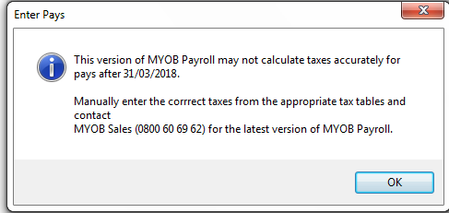
Hi everyone, With the end of the financial year here, it’s time to make sure your copy of MYOB Payroll is up-to-date and that your end of year goes smoothly. Here are the answers to some frequently asked questions about MYOB Payroll. Please note: that this information relates to the program MYOB (Desktop) Payroll, used for calculating Payroll in New Zealand. The MYOB Payroll installation has become unresponsive. What do I do? The MYOB Payroll install process is a two-step process. First it extracts the installer, then brings up the install shield Wizard. This can take a while to complete. A progress bar will appear and stop at 100%. It may remain on the screen for up to 5 minutes. After the progress bar disappears, it will appear your computer is doing nothing, but it is infact generating the installation. This can sometimes take 10+ minutes, and you'll see nothing new on the screen during this process. Despite appearances, the installation is continuing in the background. You can find more detail on this here. How do I make sure that I’ve got the latest version of MYOB Payroll installed? With MYOB Payroll open, you can check the version number by holding down CTRL and pressing R. The current version is 2018.1.995. Why am I getting this message? This message means that you are trying to process a pay after 1/4/2018 and haven't updated to Payroll 2018.1 If you don't install the 2018.1 update, you risk having PAYE calculate incorrectly. If you have a current business support subscription you can download MYOB Payroll from your my.MYOB account. You can find out more about this here. After installing the update, I am encountering a C0000094 error. What should I do? This particular message is caused by missing or corrupt fonts on the computer. Our Help Article: Reports or pay slips not printing correctly/C0000094 error would be able to assist with that message. What reports should I run and what processes should I follow at the end of the financial year? The following Help article has more information on all your End of financial year tasks. Should you have any further queries regarding this information, please feel free to post on this forum. We're always happy to assist.4KViews1like0Comments